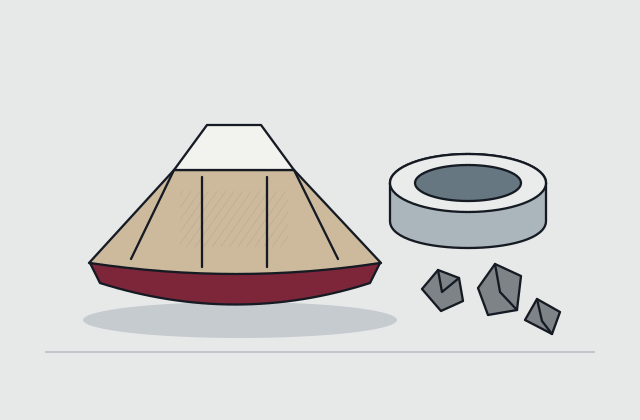
The journey becomes a specimen
In September 2023, the OSIRIS-REx mission returned material from asteroid Bennu to Earth. A journey across space became something researchers could examine with laboratory instruments. The scientific value lay in the material and in the record of where it came from. [1, 2]
What the first examination found
NASA’s October 2023 report described carbon-rich material and water-bearing clay minerals in the returned sample. Scientists used tools including electron microscopy, X-ray diffraction and chemical analysis to examine small pieces. Water in a mineral is a different observation from a pool of liquid water. Neither that finding nor the presence of carbon is evidence that Bennu hosted life. [1]
A question to carry to the board
The story invites a comparison with other expeditions that bring material back for analysis. What can a fragment preserve about an environment that cannot be visited easily? The answer depends on the sample, the instrument and the limits of the inference. This article focuses on the return and the initial 2023 findings, rather than claiming to summarize every later result. [1, 2]
Source notes
Numbers in the text refer to these sources. This is an editorial account, not a first-hand expedition report.
Board connections are editorial comparisons and cite the evidence they use. They are distinct from your personal notes.
Editorial Standards: sources, illustrations and corrections ↗Written and source-checked: 12 November 2026.