More than a route across water
HMS Challenger travelled through the world’s oceans between 1872 and 1876. Its research included seawater temperature, salinity and density, as well as currents, sediments and marine life. The voyage joined many observations into a record that helped establish modern oceanography. [1]
A depth and a sample
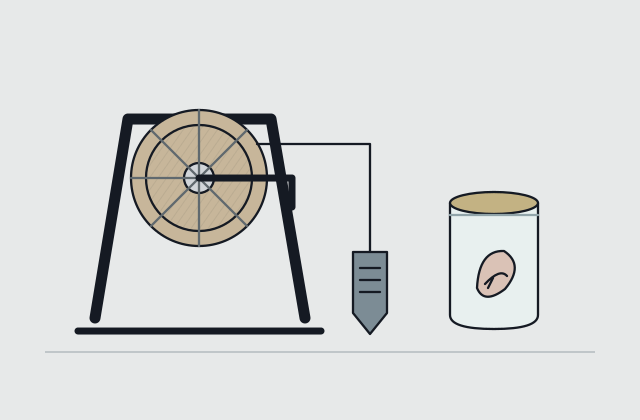
Sounding and dredging equipment brought the inaccessible seafloor into the ship’s work. Measurements described a location; recovered material could be examined and compared. The expedition’s results eventually filled 50 volumes, showing how much scientific work continued after the ship returned. [1, 2]
What makes observations comparable?
A specimen gains meaning when it can be connected to its place and collection method. This is the question to take to the grid. Challenger and the 1977 vent expedition both investigated the deep ocean, but with very different access and instruments. Challenger and ice-core research invite another comparison: both depend on placing individual measurements within a larger record. These are editorial connections between practices, not claims that one expedition directly caused the other. [1, 2]
Source notes
Numbers in the text refer to these sources. This is an editorial account, not a first-hand expedition report.
Board connections are editorial comparisons and cite the evidence they use. They are distinct from your personal notes.
Editorial Standards: sources, illustrations and corrections ↗Written and source-checked: 12 November 2026.